

Expert Guidance to Strengthen Governance and Execution
Project management consulting at Pro Partners encompasses the systematic application of advanced methodologies, governance frameworks, and evidence-based practices to enhance organizational capability and project performance. Our consultants provide strategic guidance across the full project lifecycle, integrating rigorous planning, risk analytics, resource optimization, and stakeholder alignment to ensure disciplined execution and measurable outcomes. Through the application of PMI, Agile, and hybrid standards, we tailor our approach to the unique operational context of each client, enabling more efficient decision-making, improved cross-functional collaboration, and sustained organizational resilience. This comprehensive service model supports initiatives ranging from targeted process improvements to complex, enterprise-level transformations, ensuring that every project advances with clarity, precision, and strategic coherence.

There's a Difference
- Experience rigorously structured methodologies
- Benefit from evidence-driven decision support
- Access multidisciplinary strategic expertise
- Engage with precision-focused governance
- Achieve measurable, outcome-aligned performance
- Leverage adaptive, context-specific solutions
- Strengthen execution through analytical insight
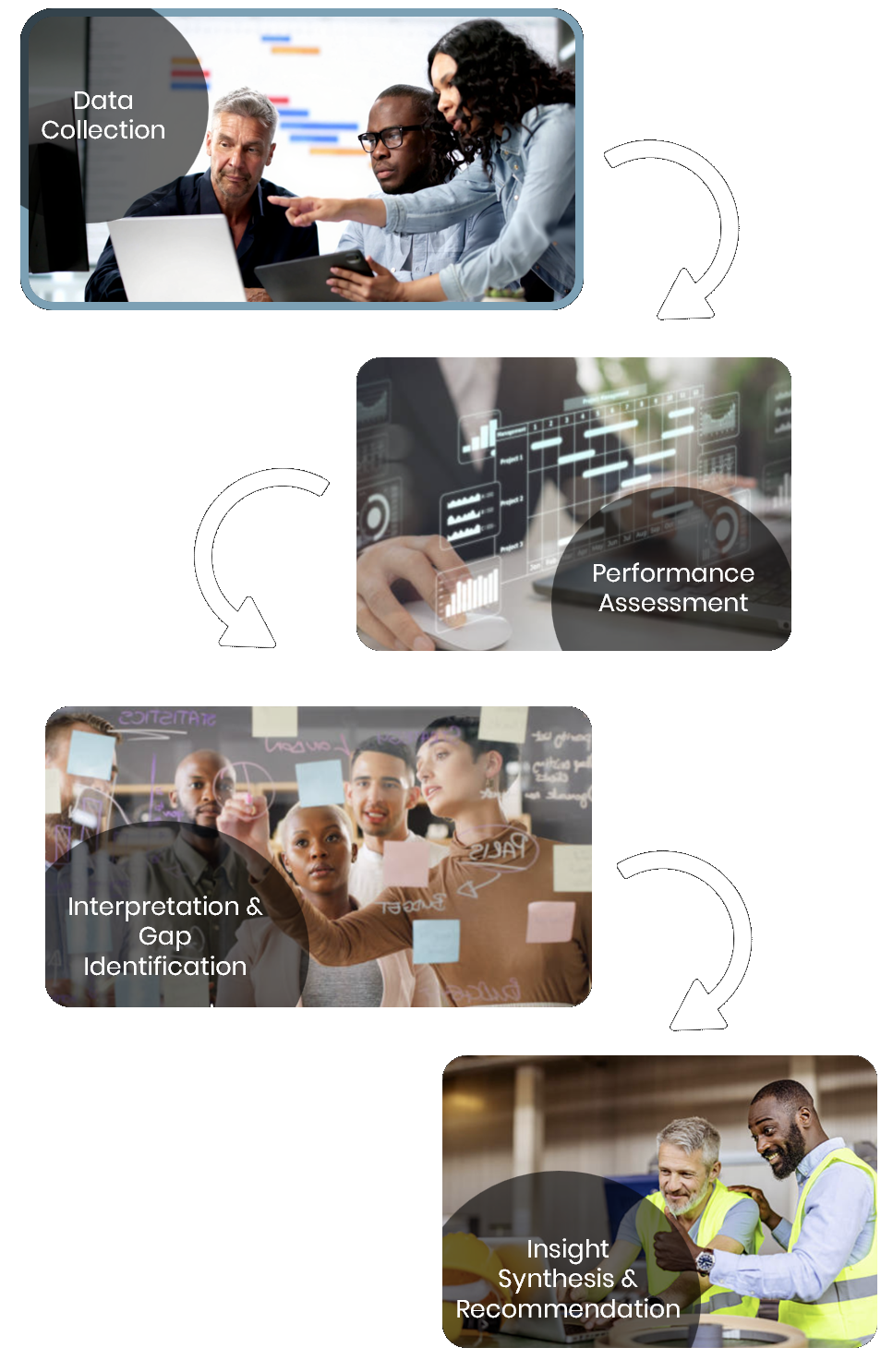
Evidence-Based Assessment for Improved Organizational Decision-Making
Project evaluation and review

Project Planning and Strategy
Scope Definition
Scope definition constitutes the foundational stage in which clear, measurable, and strategically aligned project objectives are established through systematic inquiry and stakeholder engagement. This process delineates the boundaries, deliverables, and success criteria of the initiative, ensuring conceptual coherence and reducing ambiguity. By articulating explicit constraints, assumptions, and dependencies, scope definition enhances predictability, supports informed decision-making, and provides a stable framework for subsequent planning activities.Â
Project Plan Development
Project plan development involves the construction of a comprehensive and methodologically rigorous blueprint that integrates schedules, resource allocations, budget parameters, and interdependent work structures. This process synthesizes analytical forecasting, capacity assessments, and stakeholder requirements to create a coherent roadmap that guides execution. Through the alignment of timelines, responsibilities, and performance metrics, the project plan establishes the procedural discipline necessary for efficient coordination and oversight.Â
Feasibility Analysis
Feasibility analysis comprises a multidimensional evaluation of the technical, economic, and operational viability of a proposed initiative, employing rigorous analytical models and comparative assessments. This process examines technological capabilities, cost structures, regulatory constraints, and organizational readiness to determine whether the project can be executed successfully within existing or projected conditions. Feasibility analysis provides a robust foundation for informed strategic decision-making.Â
Risk Management
We provide comprehensive risk management services that integrate advanced analytical methodologies with industry-recognized frameworks to identify, evaluate, and prioritize threats across the full project lifecycle. Our approach synthesizes quantitative modeling, qualitative assessment, and scenario-based forecasting to generate a robust understanding of organizational vulnerabilities. Through tailored mitigation strategies and continuous monitoring, we enhance project resilience, strengthen decision-making, and support the sustained achievement of strategic objectives.
Risk Identification
Risk identification involves the systematic detection of potential threats that may disrupt project objectives, using structured methodologies such as process mapping, expert elicitation, and historical data analysis. This stage requires a multidimensional examination of technical, operational, financial, and organizational factors that may introduce uncertainty. The findings are formalized in a comprehensive risk log, establishing the foundation for subsequent evaluation and control processes.
Risk Analysis and Assessments
Risk analysis and assessment apply quantitative and qualitative techniques to evaluate the probability, impact, and temporal characteristics of each identified risk. This process utilizes established frameworks such as sensitivity analysis, probability modeling, and impact scales to generate a nuanced risk profile. The results enable informed prioritization and guide decision-makers in aligning resources with areas of highest strategic vulnerability.
Development of Mitigation Strategies
The development of mitigation strategies entails formulating targeted, evidence-based interventions designed to reduce, transfer, or eliminate the likelihood or impact of high-priority risks. This process integrates scenario planning, contingency design, and adaptive control mechanisms to strengthen project resilience. Each strategy is documented through actionable plans that support proactive governance and continuous risk monitoring throughout the project lifecycle.


Change Management Solutions
Our change management services guide organizations through complex transitions by aligning stakeholder behavior, operational processes, and strategic objectives. Through structured methodologies and targeted interventions, we facilitate sustainable adoption and ensure measurable improvements in organizational performance.
Support
We provide structured guidance to help organizations integrate new practices and technologies through systematic assessment, targeted training, and tailored implementation strategies. Our approach ensures that teams develop the competencies to adopt innovations effectively and sustain improvements.
Coaching
We deliver expert coaching that supports leaders and teams in navigating the behavioral, cultural, and structural dimensions of organizational change. Through evidence-based frameworks and ongoing engagement, we foster alignment, resilience, and a shared commitment to the desired future state.
Project Monitoring and Control
Progress monitoring involves the systematic application of metrics and key performance indicators to evaluate the trajectory of project execution and ensure alignment with established objectives. Through structured status reporting, we translate performance data into clear, decision-ready insights that support managerial oversight and timely interventions. Continuous review and adjustment processes, including formal audits and iterative refinements to the project plan, enable organizations to respond effectively to emergent conditions and maintain strategic coherence throughout the project lifecycle.
Strategic Consulting Solutions for your Projects
Our consultation process provides an opportunity to discuss your organizational needs and explore tailored solutions that align with your strategic objectives. By connecting with our team, you gain access to expert guidance, comprehensive insights, and a clear pathway for advancing your project, operational, or training requirements.